
Asthma attacks can escalate without warning, and a fast response may save a life. The following CPR tips for responding to asthma attacks equip healthcare providers and concerned individuals with the knowledge to act quickly and confidently when someone struggles to breathe.
CPR123 delivers American Heart Association courses at convenient locations across New York and Texas, giving you access to life-saving training close to home. Understanding proper emergency response during an asthma episode enables you to act quickly before professional help arrives.
Recognize an Asthma Attack
When someone experiences an asthma attack, their airway tightens, and breathing becomes extremely difficult to sustain. Look for wheezing and rapid breathing as immediate warning signs. The person may also struggle to speak in full sentences or appear visibly anxious and pale.
Skin around the neck or ribs may pull inward with each breath, a sign of serious respiratory distress. Act immediately when you observe these changes, because delayed action allows the attack to worsen and reduces the person’s chances of a safe recovery before emergency medical help arrives.
Call for Help Right Away
Once you recognize an asthma attack, call 911 immediately if the person doesn’t have a rescue inhaler nearby or if their symptoms don’t improve quickly. Stay with the person and keep them calm while you wait for help to arrive. Help the person sit upright, as this position opens the airway and makes breathing easier.
Remove any tight clothing around the neck or chest area to reduce additional discomfort. Avoid laying the person flat on their back, as this position can restrict the airway and make breathing more difficult during an attack.
Use the Rescue Inhaler Correctly
If the person carries a rescue inhaler, help them use it as soon as possible. Shake the inhaler well before each use. Ask the person to exhale completely, then place their lips firmly around the mouthpiece. Press the inhaler once while the person breathes in slowly and deeply.
Tell them to hold their breath for about 10 seconds to allow the medication to reach the deep lung tissue. Repeat the dose after one minute if symptoms persist. Completing an AHA Heartsaver course teaches you how to support someone through this process.
When to Start CPR: What You Should Know
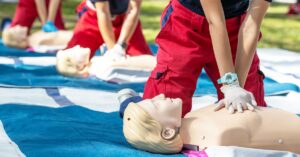
Start CPR if the person loses consciousness and stops breathing normally. Check for a pulse and look for any movement or response before you begin. Place the heel of your hand on the center of the person’s chest and push down firmly at a rate of 100 to 120 compressions per minute.
If you have training in rescue breathing, deliver two breaths after every 30 compressions. Continue CPR until emergency responders arrive and take over. Regular training at CPR123 keeps you confident and prepared to handle high-pressure situations effectively.
Get Trained and Stay Ready
Asthma emergencies require fast thinking and practiced skills. These CPR tips for responding to asthma attacks cover the steps that give every victim a stronger chance of survival.
CPR123 offers AHA certification courses in Manhattan, Brooklyn, Queens, Mineola, Huntington, and San Antonio to help you prepare for real-world emergencies. Enroll today and gain the confidence you need when it counts.