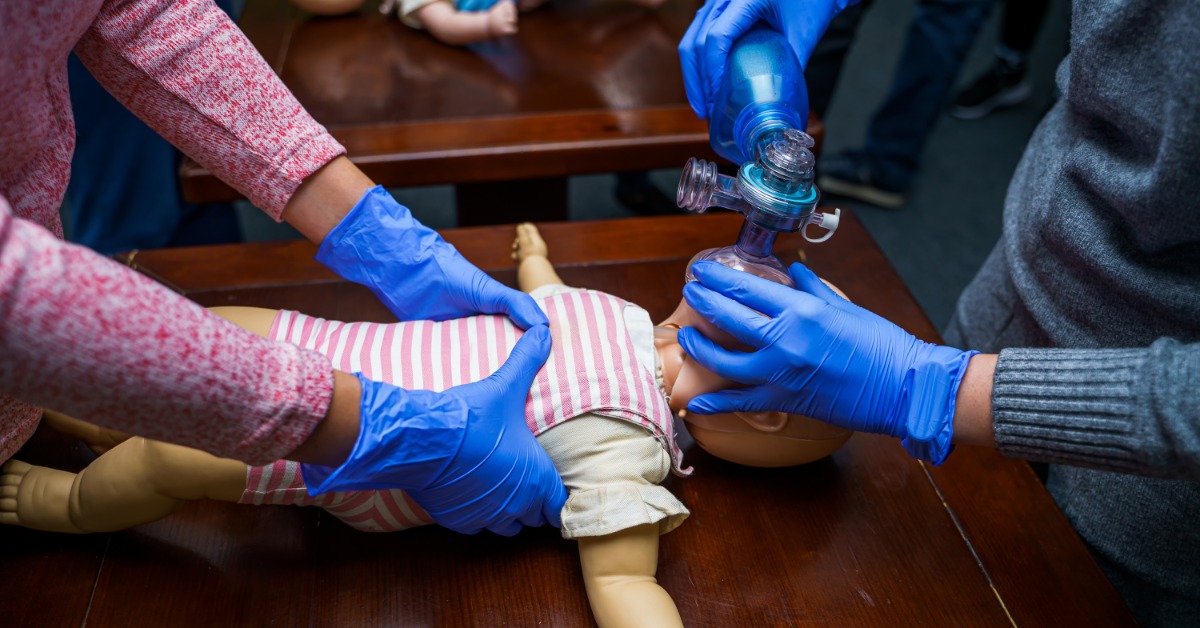
Pediatric emergencies move fast, and providers who walk into them unprepared can face serious consequences. An AHA PALS course trains healthcare professionals to recognize and manage life-threatening emergencies in infants and children with coordinated team effort and clinical precision.
Whether you work in a pediatric unit, an emergency department, or a general clinical setting, knowing what to expect during your PALS certification course will help you arrive ready to learn and leave ready to act. The course is demanding by design, because the patients it prepares you to treat cannot afford anything less.
PALS Algorithms: The Framework Behind Every Decision
The algorithm-based structure of PALS is one of its defining features. Rather than relying on improvisation during a crisis, providers follow evidence-based decision trees that guide assessment and treatment from the first moment of recognition through the resolution of a pediatric emergency.
That structure exists because pediatric emergencies punish hesitation, and algorithms eliminate the guesswork that costs time. Instructors introduce the algorithms early in the course and return to them repeatedly, reinforcing the logic behind each decision point so that providers will internalize the framework rather than simply memorize it.
How Algorithms Guide Your Assessment

Algorithms in PALS organize clinical thinking around two foundational assessments: the pediatric assessment triangle and the systematic ABCDE approach (Airway, Breathing, Circulation, Disability, Exposure). Instructors walk students through each algorithm in sequence, using case simulations to build the muscle memory that real emergencies demand. You learn to identify whether a child is in respiratory distress, respiratory failure, or cardiac arrest, and the algorithm tells you exactly where to go from there.
Students who enter the course feeling uncertain about that process typically leave with a clear, repeatable mental framework they can apply under pressure. The structured progression from recognition to intervention is what makes the algorithm approach so effective in high-stakes pediatric care.
Putting Algorithms Into Practice
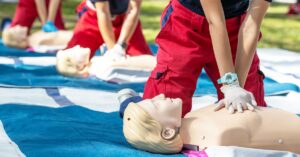
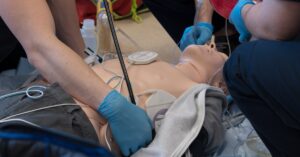
The course dedicates significant time to scenario-based practice, where algorithm knowledge becomes a real-world skill. Teams work through simulated cases that mirror the pressure of actual pediatric emergencies, with instructors observing how providers apply the correct algorithm and communicate clearly with their team throughout each intervention. Feedback is immediate and specific, so students understand not just what went wrong but why the correct sequence matters clinically.
Scenarios escalate in complexity as the course progresses, pushing providers to manage multiple variables simultaneously rather than responding to a single, isolated problem. By the end of this segment, the algorithms stop feeling like a checklist and become more of a reflex.
EKG Interpretation: Reading the Rhythms That Matter
Cardiac rhythm recognition is a central competency in PALS, and the CPR123 course takes it seriously. Providers must accurately identify a specific set of rhythms and connect them to the appropriate treatment protocols.
Misreading a rhythm in a pediatric emergency leads to the wrong intervention, and the course makes that consequence clear from the start. Students spend substantial time with EKG strips and rhythm simulations before applying that knowledge to a scenario, building a foundation of recognition that holds up under real pressure.
Rhythms You Need to Recognize
The PALS curriculum focuses on the rhythms most likely to appear in pediatric cardiac emergencies. Students practice identifying these rhythms through repeated exposure to EKG strips and rhythm simulations:
- Sinus tachycardia
- Supraventricular tachycardia (SVT)
- Ventricular tachycardia (VT)
- Ventricular fibrillation (VF)
- Asystole
- Pulseless electrical activity (PEA)
- Bradyarrhythmias requiring intervention
The goal is not memorization alone. Instructors push students to connect each rhythm to a clinical picture, asking whether a patient is stable or unstable and what intervention the rhythm demands. Speed and accuracy both count, and the simulation environment gives providers a low-stakes space to build confidence before they need it in a real resuscitation.
Students who struggle with a particular rhythm get targeted practice until recognition becomes consistent and automatic. That repetition is intentional, because confident rhythm identification in a pediatric emergency can be the difference between the right intervention and a critical delay.
Airway Management: Securing the Pediatric Airway
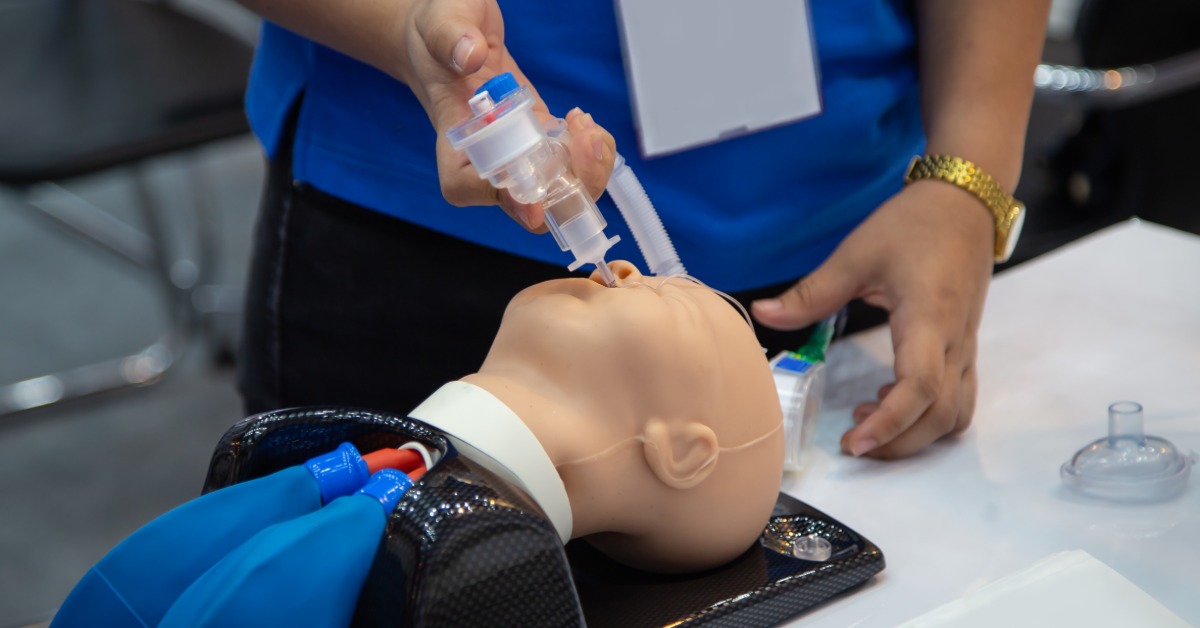
Pediatric airways present unique challenges that adult-focused training doesn’t fully prepare providers to handle. The structural differences between a child’s airway and an adult’s change how providers approach oxygenation, ventilation, and intubation at every stage of an emergency response. The course addresses those differences directly and gives providers hands-on time with the equipment and techniques pediatric patients require, rather than asking them to adapt adult skills on the fly.
Skills and Techniques Covered in the Course
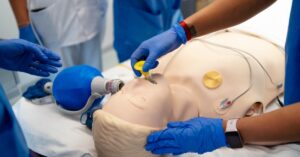
The airway management section of the AHA PALS course covers a range of techniques appropriate to different clinical scenarios. Providers practice bag-mask ventilation and correct positioning for pediatric patients, with additional focus on airway adjuncts, including oral and nasal airways.
The course also covers advanced airway skills, including endotracheal intubation, with a strong emphasis on confirming correct placement and monitoring the patient after insertion. Instructors stress the importance of reassessment throughout, because a secured airway in a pediatric patient requires ongoing attention and cannot be treated as a completed task.
Providers also work through scenarios that combine airway management with rhythm recognition and algorithm application, because real emergencies rarely isolate a single skill. That integrated practice is what separates a provider who knows the material from one who can perform under pressure. Students leave this section with a clear understanding of when to escalate from basic airway management to advanced intervention and how to execute that transition without losing critical time.
Train Today. Respond With Confidence Tomorrow.
What to expect during your PALS certification course is simple. You’ll receive an intensive, skills-based training experience that challenges you to think clearly and act decisively when pediatric patients need immediate intervention. The course pushes providers to bring every skill together into a single, fluid response, because that integration is what real emergencies demand.
CPR123 offers AHA PALS certification courses across multiple locations in New York and Texas, with expert instructors who guide providers through every algorithm, every rhythm, and every airway scenario from start to finish. When a child’s life is on the line, PALS ensures you are ready.