Every second counts when resuscitating a newborn. Traditional training teaches the basics but falls short of capturing the pressure and complexity of real emergencies. Simulation technology is changing NRP training by giving providers crucial hands-on experience before they encounter real-life situations.
Realistic Practice Without Real-World Risks
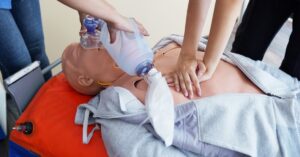
High-fidelity manikins can mimic a newborn’s physical characteristics and responses with remarkable accuracy. These sophisticated simulators can simulate cyanosis, respond to ventilation efforts, and display heart rate changes in response to the interventions providers perform.
Instructors can program specific scenarios, from meconium aspiration to persistent bradycardia, allowing learners to practice critical decision-making in a controlled environment. This level of realism helps providers build muscle memory and confidence that textbooks alone cannot provide.
Immediate Feedback Accelerates Learning
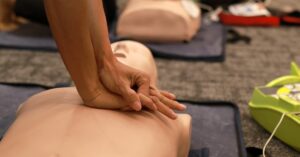
Modern simulation technology tracks every intervention during training scenarios. Providers receive instant feedback on chest compression depth, ventilation volume, and the timing of their actions.
An AHA NRP course that incorporates this technology allows instructors to review performance metrics with learners immediately after each scenario. This data-driven approach helps providers quickly identify areas for improvement, making training sessions more efficient and effective than ever before.
Team Coordination Gets Real Practice
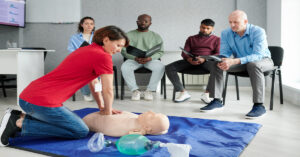
Neonatal resuscitation rarely happens in isolation. Simulation training creates opportunities for entire teams to practice communication and coordination.
Providers learn to delegate tasks, appropriately call for help, and maintain situational awareness while managing a critical patient. These soft skills prove just as vital as technical competence when a newborn’s life hangs in the balance.
Building Confidence for Rare Events
Most healthcare providers will encounter neonatal resuscitation infrequently throughout their careers. However, simulation technology ensures that even rare complications remain top of mind for providers. By practicing low-frequency, high-risk scenarios, clinicians maintain their readiness to respond effectively when those situations arise unexpectedly.
The Future of Neonatal Resuscitation Training
How simulation technology is changing NRP training continues to evolve, as developers create virtual reality headsets and online platforms for remote simulation sessions. These innovations promise to make high-quality training even more accessible to providers across different geographic locations and practice settings.
Ready to elevate your neonatal resuscitation skills? Enroll today in a cutting-edge NRP course with CPR123 and gain hands-on experience with the latest simulation technology. Visit one of our convenient New York or Texas locations, and take your next step toward confident, effective neonatal care.